Synchronicity as My Co-Author
20 August, 2026
I am writing a book called Humanity Enters Therapy. In it, Humanity enters therapy, and the therapist asks, “Why are you here?”
“I don’t want to be here,” Humanity says.
“Well, why are you here?”
“My partner told me to come. I just don’t want to be here, but she told me I had to.”
“Who is your partner?” asks the therapist.
“Gaia,” says Humanity. “She says she can live without me, but I can’t live without her.”
I thought I was the person writing this book. Increasingly, I have wondered who—or what—else might be writing it with me.
The book is now in its final draft before I send it to an editor for still more editing. Much has happened, synchronicity-wise, as I cruise toward the end. Again and again, something I am writing about has been met by something in my surroundings that seems to answer it, enlarge it, or point me somewhere I had not thought to go.
One example occurred while I was writing a chapter called “Mystical Experiences Are Global Synchronicities.” Mystical experiences are being reported by people all over the world, and there are reasons to think the opportunities for having them are increasing. Four major doors into mystical experience are already well known: spontaneous experiences that simply happen, deep meditation, psychedelics, and near-death experiences. Each provides a different way for people to enter a mystical experience.
As I was writing about these four doors, my friend and colleague Todd Bureau told me about someone he knew who had developed a virtual-reality method for inducing mystical experiences. The researcher, David Glowacki, had used standard mystical-experience questionnaires and found that people participating in these virtual-reality experiments were reporting valid mystical experiences.
Well! That fit exactly with what I was writing. I had four doors. Suddenly, through Todd, a fifth door walked into the chapter—a technologically created route into mystical experience that could potentially become available to people around the world. Just when I was writing about the increasing global accessibility of mystical experience, another means of producing them entered my awareness.
Days later, I was writing about what I call the Collective Self-Observer: Humanity developing the capacity to observe itself, much as you can observe yourself through your own Personal Self-Observer. I was trying to imagine how people participating in a Collective Self-Observer might interact with one another.
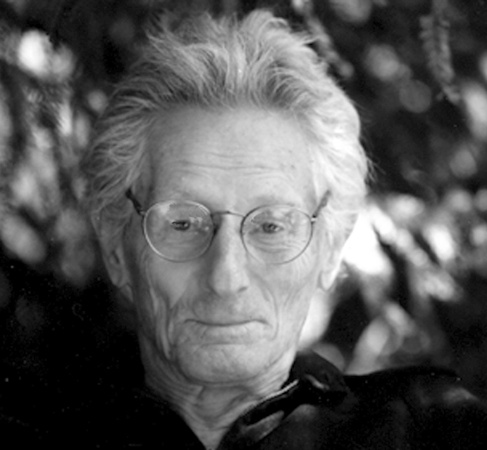
While I was working on this, I went to the home of my friend Michael Grosso. In our conversation, Michael added something I had not thought of: what if participants in the Collective Self-Observer found ways to temporarily merge their minds, creating, for a time, a group mind?
That was exactly the problem I was working on: how could these people become something more than a collection of individuals observing Humanity? Michael had given me a possible mechanism I had not considered. Again, an idea arrived from outside me while I was wrestling with the question it addressed. The idea became part of the book.
Subsequently I was writing about artificial intelligence. I was considering the possibility that if we approach AI primarily with fear, that fear may increase as AI becomes more powerful. We may become increasingly intimidated by it and therefore more susceptible to being controlled by it. Fear narrows our attention. Curiosity opens it. We need to understand AI as it grows.
Soon after finishing that passage, I came home from John D’Earth’s house and opened the novel I was reading, Culpability. On the next page waiting for me was essentially the same idea. We cannot simply be afraid of artificial intelligence. We have to become curious about it, engage it, and try to understand how its mind works. AI is a mind created from the products of human minds, and a new science is now developing to understand how this silicon mind works.
Then, as I continued reading Culpability, I came across another idea that belonged in what I was writing about AI: Who is teaching artificial intelligence to be good?
What we mean by “good” varies enormously. But Humanity has already established some boundaries. We have concepts such as crimes against humanity. We have spent centuries arguing about justice, cruelty, responsibility, dignity, and the treatment of other human beings. Perhaps we do not have to begin by agreeing on everything that is good. We can begin with some things we have already agreed are terribly wrong.
And then something stranger happened.
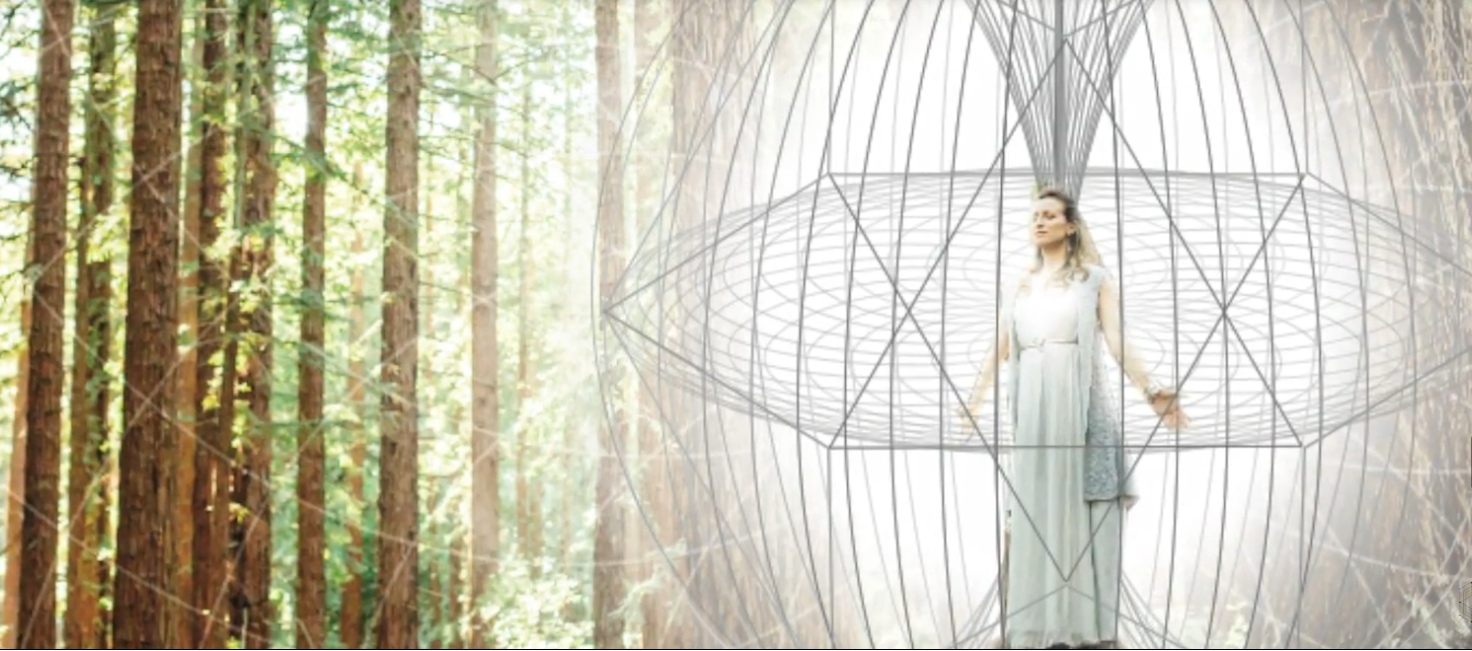
I was walking in the forest near my house. Something lovely was going on as I merged with the forest and felt myself becoming part of the green and the trees, as sometimes happens to me there. Suddenly I felt a connection between my mind and something far above me—a consciousness I began calling the Mind in the Sky.
In what felt like a telepathic communication, the Mind in the Sky told me that it needed eyes on the ground. It needed people who could tell it what was happening down here because it was not on the surface of the Earth. I was one of the people serving that role.
Then, quite to my surprise, came another message: it was also feeding ideas to me for the book.
That stopped me.
The earlier experiences now looked somewhat different. Ideas had been coming to me when I needed them. Todd and the virtual-reality mystical experience. Michael and the merging of minds. Culpability and the fear of AI. Culpability again and the question of teaching AI to be good.
Could some of these ideas that seemed to arrive just when I needed them be coming through this connection? I do not know. But the possibility began to make a peculiar kind of sense. Perhaps I was serving as eyes on the ground while something else was serving as eyes in the sky. Information might be moving in both directions.
So what am I to make of all these coincidences?
I am writing a book, and people, conversations, experiences, other books, technologies, and unexpected ideas keep arriving at remarkably appropriate moments. They do not write the book for me. I still have to notice them, question them, decide whether they belong, and figure out what to do with them. But they have become part of the writing process.
Perhaps synchronicity has become one of my co-authors.
I sometimes play with the idea that somewhere behind all this is ECCO—the Earth Coincidence Control Office—arranging for certain people, ideas, books, and experiences to cross my path just when I am ready to notice them. I don’t know whether ECCO exists. I do know that these coincidences occurred. The question is what to make of the pattern they seem to form.
And it leaves me with a question I did not have when I began writing this book: When an idea arrives just when a writer needs it, where does authorship end and synchronicity begin?