Image source: Wikimedia Commons
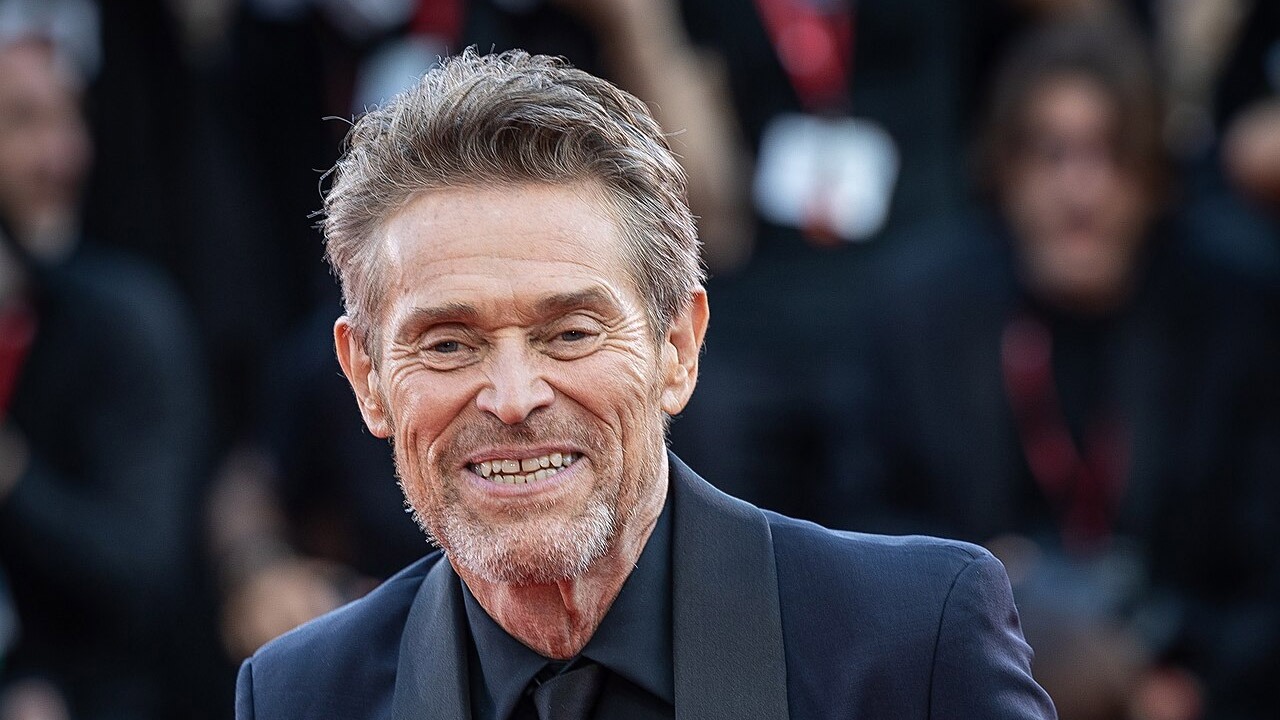
Willem Dafoe and the Role That Found Him
Willem Dafoe was given an obscure 1895 novella by Arthur Schnitzler. A friend told him he should read it because he thought there was a movie role in it for him. Dafoe read the story, liked it, and began thinking about finding out who owned the film rights.
What he did not know was that the process was already underway. A screenplay existed. Killer Films was preparing the project, Late Fame, with director Kent Jones.
Then came the coincidence.
Dafoe happened to run into Jones, whom he knew through the New York Film Festival. The two found themselves sitting next to each other on a flight. They talked throughout the trip, catching up on their lives and work. Yet neither mentioned Schnitzler, Late Fame, or the possibility of Dafoe playing its central character.
Two days later, Jones called Dafoe and offered him the role.
Dafoe’s response to the remarkable convergence was wonderfully simple: “I think it’s called kismet.”
From the perspective of meaningful coincidences, the sequence deserves attention. One pathway began with a friend giving Dafoe a century-old novella and suggesting that its central role suited him. An apparently independent pathway was already moving through the filmmakers who were preparing that same story for the screen. Then Dafoe and the director were unexpectedly brought together on a flight—without either realizing that the same project was already connecting them.
The significance does not depend upon proving that some invisible force arranged the events. The coincidence itself is enough to provoke curiosity. How did these independent pathways converge so precisely around the same person, story, and moment?
And Dafoe did something essential: he noticed.
Meaningful coincidences can draw our attention toward relationships and possibilities we did not know were developing. They may encourage us to look again at a person, an opportunity, a decision, or a direction our lives are taking. But they do not relieve us of judgment.
Meaningful coincidences are suggestions, not demands.
Dafoe still had to decide whether to accept the role. The coincidence did not make the decision for him. It offered something much more interesting: a remarkable convergence worth noticing.
Source note: Based on Willem Dafoe’s interview with Scott Simon on NPR’s Weekend Edition Saturday about the film Late Fame. This article summarizes and comments upon a small portion of the interview for the purpose of examining meaningful coincidence. Copyright in the original interview and transcript remains with the respective rights holders.

Do you have your own story to share?
We invite you to join our global community by sharing your own story of a meaningful coincidence. It could be wondrous, funny, curious, unexplained, deeply profound, or anything in between! If you have more than one story to share, please create a separate story entry for each. Each story is limited to a maximum of 300 words.
View All Story Forum Posts
See more stories from around the globe of meaningful coincidences, synchronicity and serendipity!

Synchronicity in Numbers
I have been experiencing synchronicity daily or almost daily for about 7 years now. It...

Spiritual Awakening
I was on the verge of a manic episode when I had a spiritual moment....

Two Coincidence Stories
I have around three coincidences per day. I try to ignore them, but I’m happy...

A Dream of Betrayal Comes True
In 2020, I had a dream about my ex-boyfriend. First, a bit about him: He...

Six Years Later, a Dream Number Finds Meaning
Six years ago, around 2020, right after a session using LSD, I had a hyper-vivid...
It Started with “Not Tonight, Josephine”
June 2, 2024, at 12:45 p.m. I was leading an AA meeting. About 45 minutes...

“You Never Sent Me a Message Today, Dad”
It was my father's birthday, and since he had long since passed, I went to...
Ten Miles Away, One Split Second
I'm a realtor and had just celebrated the purchase of a new home in the...

Before I Could Make the Call
A librarian from another town, 30 miles away, had asked for help locating a pioneer...
Among the Stars, Into the Abyss
This was my introduction to the Otherworldly, on February 6th, 2011, in the Province of...
Willem Dafoe and the Role That Found Him
Willem Dafoe was given an obscure 1895 novella by Arthur Schnitzler. A friend told him...

Three Dreams and an Unexpected Email
After I was attuned to Reiki, I began noticing coincidences everywhere. One of the most...
Life Is Strange: A Stunning Encounter with Synchronicity
Shortly after the turn of the millennium, my friend asked me if I would give...
The Moon at 30,000 Feet
I was on a plane from Edinburgh to Valencia, re-reading The Positive Psychology of Synchronicity,...